
Walk into any fully equipped Pilates studio and your eyes are likely to land on a curious-looking piece of equipment: long frame, springs underneath, ropes and straps above — is it a medieval torture device? A bed? A rowing machine? For those new to the world of Pilates, the Reformer tends to raise more questions than answers.
But for those of us who teach, practise, or live and breathe the Method, the Reformer is nothing short of brilliant. It’s versatile, endlessly adjustable, and just the right mix of challenge and support. Let’s take a closer look at how this staple apparatus came to be, what makes it unique, and why it remains central to Pilates practice today.
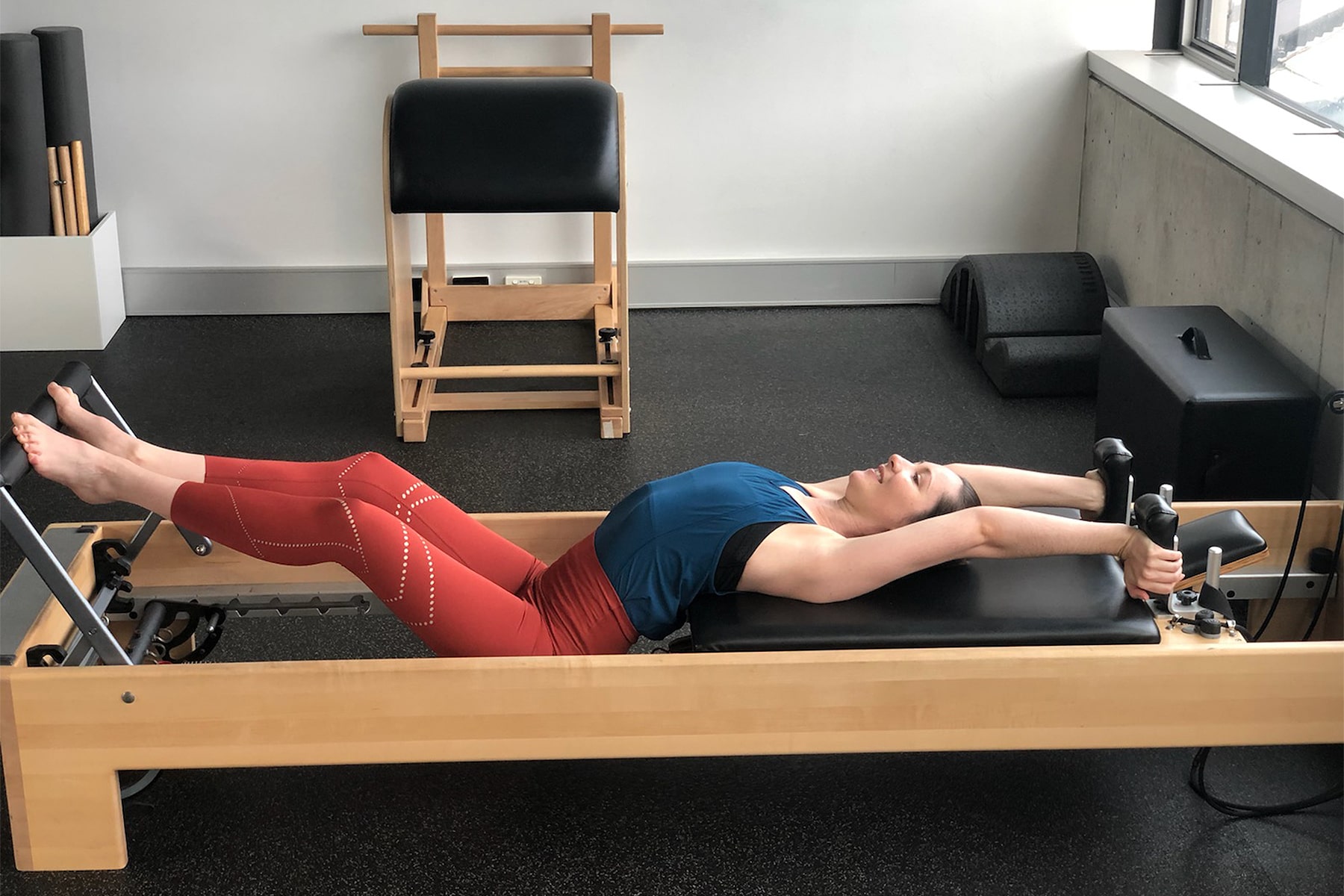
From Battlefield to Body Studio: The History of the Reformer
Like many pieces of Pilates equipment, the Reformer has its roots in rehabilitation. Joseph Pilates began experimenting with resistance-based exercise while interned on the Isle of Man during World War I. He famously attached springs to hospital beds to help immobilised patients begin strengthening without leaving their beds.
After the war, Joseph refined these ideas into a fully realised system of exercise and equipment. The Reformer, originally known as the “Universal Reformer,” was designed to ‘universally reform the body’ — hence the name. Its function was to correct asymmetries, rebuild movement capacity, and promote a balanced, resilient body.
The Reformer was one of the core studio apparatuses in his New York City studio, along with the Cadillac, Wunda Chair, Barrels, and more. It wasn’t until decades later that group Reformer classes emerged — the Reformer was always designed for individualised, progressive work.
Design and Construction: What Makes a Reformer?
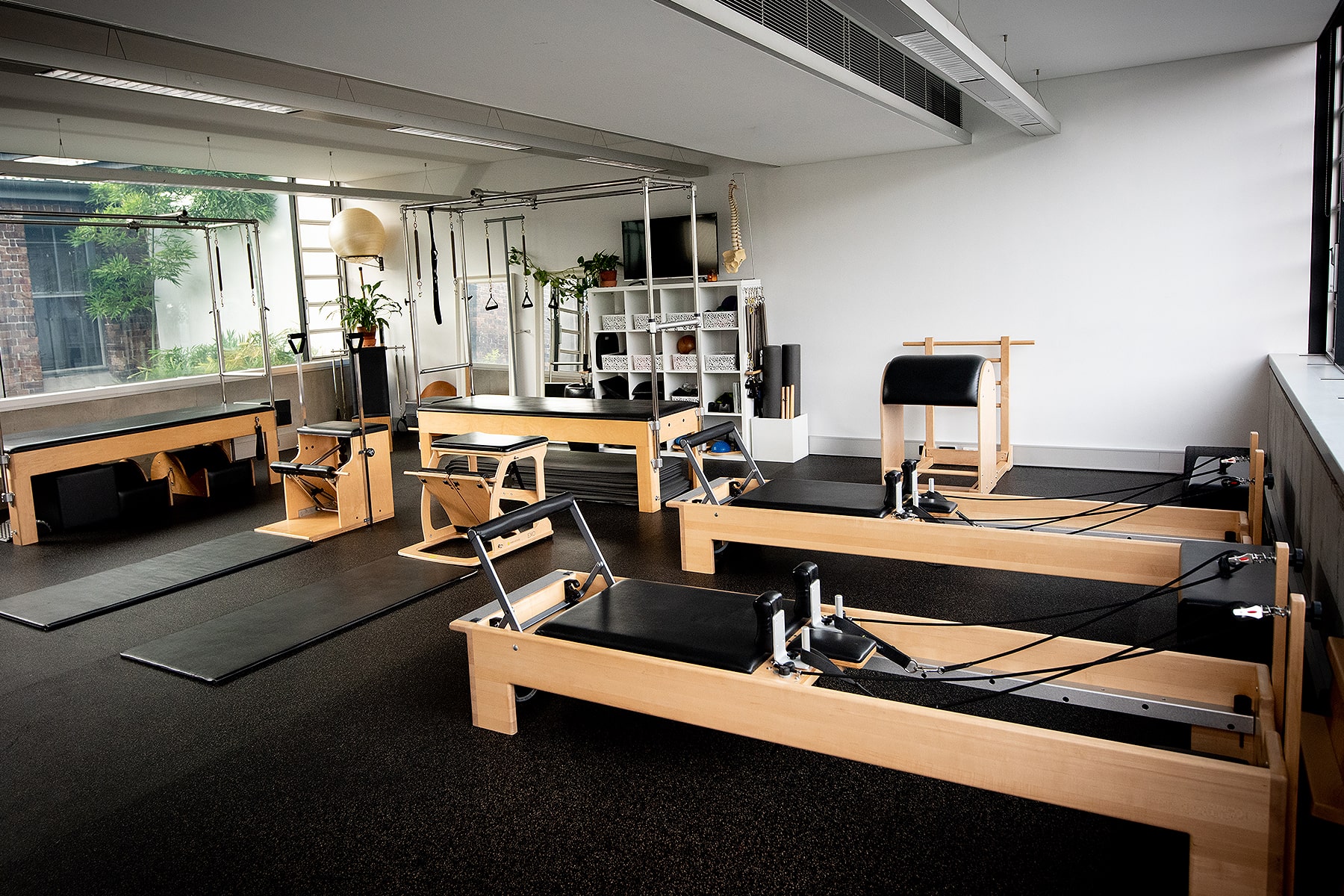
The Reformers used in the Sense of Power Pilates Studio are the Balanced Body Studio Reformers — professional-grade, studio-standard apparatus that provide durability, comfort, and versatility. They’re a far cry from the plastic home-use versions that have been making an appearance on the consumer market.
Here’s what a Studio Reformer typically includes:
- The Frame: Beautifully crafted of solid Rock Maple the Studio Reformer frames are elegant, warm and built to last a lifetime.
- Moving Carriage: Glides smoothly along rails within the frame. The client lies, kneels or sits on the carriage during exercises.
- Springs: Provide resistance. There are usually five springs of varying tension, and combinations are used to modify the challenge.
- Footbar: Adjustable bar at one end of the Reformer, used for footwork, handwork, or as a stable anchor.
- Shoulder Rests & Headrest: Offer support and alignment for supine work.
- Ropes and Straps: Attached at the opposite end, used for upper and lower limb movement.
- Gearbar and Risers: Used to adjust spring tension and rope height.
- Jumpboard (optional): A padded board that allows for plyometric work while lying down.
What makes the Reformer so powerful is the way these elements work together to create a dynamic movement environment. The carriage challenges your stability. The springs provide both feedback and resistance. The ropes cue range of motion and timing. It’s full-body, functional movement — with immediate feedback built in.
Why the Reformer is a Pilates Favourite
The Reformer is beloved in the Pilates world for good reason. It offers unique advantages for different bodies and movement goals:
1. It Makes Movement Accessible
Clients who struggle with gravity-bound mat exercises often find the Reformer more forgiving. The springs can support body weight, allowing movement to feel smoother and more achievable. It’s particularly helpful for those with:
- Joint pain or arthritis
- Postural imbalances
- Post-surgery rehab needs
- Pregnancy or early postnatal stages
2. It Teaches Precision and Control
The moving carriage and spring-loaded resistance demand mindful movement. There’s no zoning out — if you rush or compensate, the Reformer will let you know. Clients quickly learn how to isolate specific muscles, control movement through range, and stabilise their core.
3. It Highlights Asymmetries
One of the biggest challenges in human movement is uneven load — we all favour one side. The Reformer reveals these asymmetries with startling clarity. You’ll feel the difference between sides, learn to correct imbalances, and build a more resilient, symmetrical body.
4. It Builds Functional Strength
This isn’t about bulking up. The Reformer strengthens muscles in integrated patterns — think pushing, pulling, twisting, squatting. It teaches the body to work as a unit. The result? Strength that transfers into real-life activities like walking, carrying, reaching, or simply standing with better posture.
5. It Offers Endlessly Varied Movement
There are hundreds of exercises possible on the Reformer, from foundational footwork to advanced coordination challenges. It supports all planes of movement — sagittal (forward/back), frontal (side to side), and transverse (rotation) — in safe, supported ways.
The Reformer in the Pilates Method
The Reformer is not a standalone workout. It is part of a broader Pilates Method — a system of movement education and conditioning grounded in breath, alignment, centring, concentration, precision, flow, control and commitment.
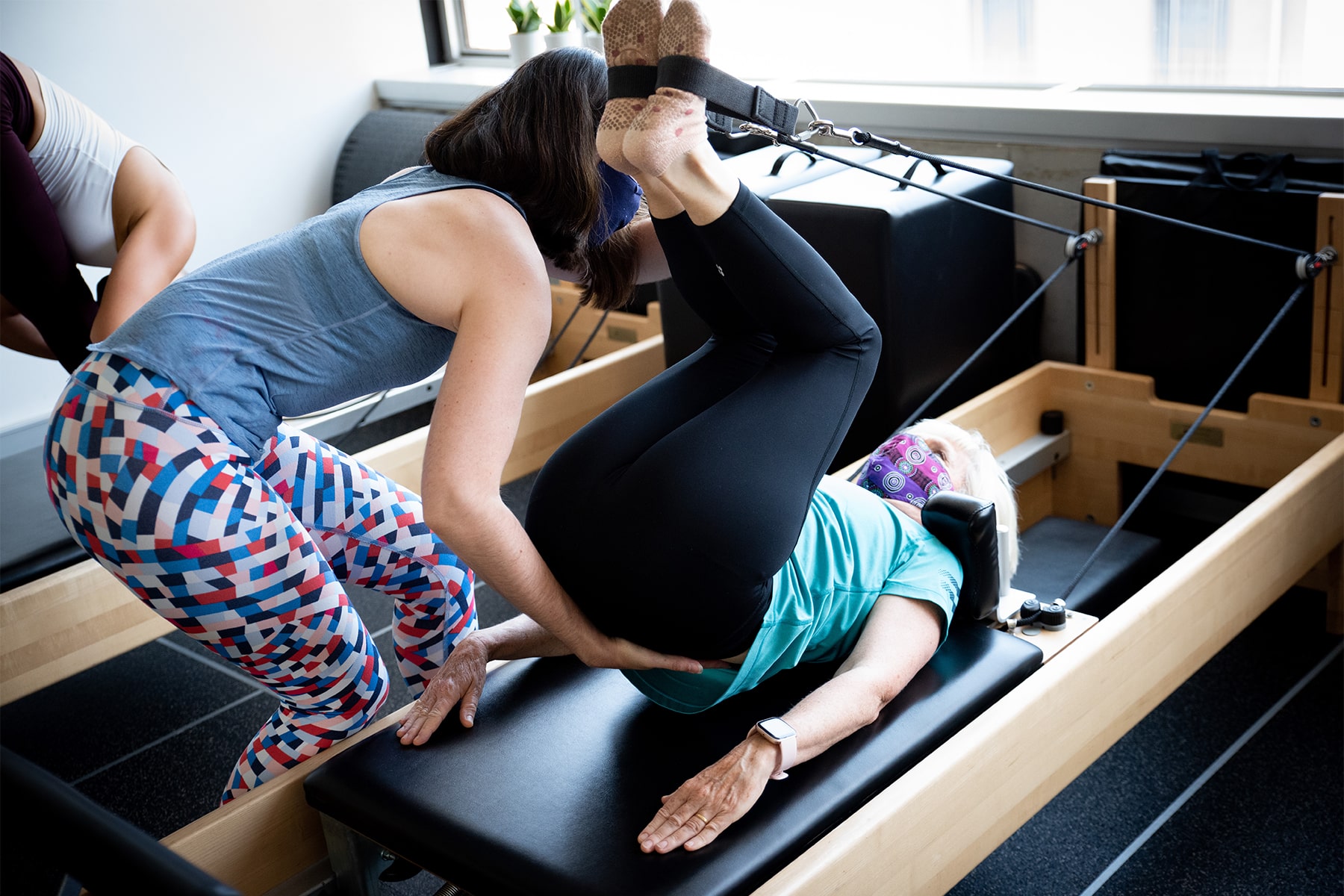
At Sense of Power Pilates, we use the Reformer alongside other apparatus such as the Cadillac, Wunda Chair, Barrels and Matwork to provide clients with a truly holistic Pilates experience. Each piece plays a unique role. The Reformer is often where clients begin to understand the deeper layers of the work.
We integrate the Reformer into:
- Private sessions: for tailored programming
- Semi-private (4:1): for supported, individualised attention
- 3:1 Reformer classes: for flow, consistency, and community-based movement
Who Is the Reformer For?
Everyone! From postnatal people rebuilding core control, to dancers refining technique, to retirees working on fall prevention — the Reformer meets the body where it is at.
- New clients looking for low-impact strength and control
- Athletes wanting to balance their training
- Older adults seeking confidence in movement
- Clients returning from injury or illness
- Desk-based workers needing posture support
Because the Reformer is so adjustable — spring settings, footbar height, headrest position, rope length — Instructors can customise the session for each body.
From Foundations to Fancy: Progression on the Reformer
A common misconception is that Reformer based Pilates is “easier” because the springs help you. In reality, the springs create load — and how that load is managed depends on your positioning, skill, and control.
Instructors might use springs to assist in early stages (e.g. helping support the hips in a Pelvic Curl or Bridge), and later reduce springs to challenge stabilising systems. Less spring doesn’t mean less work — it usually means more challenge!
Progression on the Reformer often looks like:
- Greater range of motion
- More precise control
- Better breath coordination
- Stability under load or movement
- Greater flow and integration of exercises
Reformer Myths We Love to Bust
MYTH: It’s just for fit people.
FACT: It’s for every body — and it often works better for beginners.
MYTH: You have to go fast to get results.
FACT: Slower often equals harder. Control is the real challenge.
MYTH: It’s a ‘women’s workout.’
FACT: Pilates was created by a man, and professional athletes use it worldwide. Gender has nothing to do with it.
Final Thoughts: Why the Reformer Is Still Central to Pilates
There’s a reason the Reformer has been around for over 100 years. It’s thoughtfully designed, deeply effective, and endlessly adaptable. It meets you where you are — and then takes you further.
At Sense of Power Pilates, we see firsthand how the Reformer helps our clients:
- Reconnect to their bodies
- Move without pain
- Build strength they can trust
- Develop a sense of power and confidence in movement
Curious? The best way to understand the Reformer is to get on one. Come see what your body is capable of — you might just surprise yourself.
Resources + References:
- Balanced Body. (n.d.). Studio Reformer. https://www.balancedbody.com.au/studio-reformer
- Pilates Method Alliance. (n.d.). What is Pilates?. https://www.pilatesmethodalliance.org/PMA/About-Pilates/What-is-Pilates.aspx
- Pilates Association Australia. (n.d.). Scope of Practice. https://www.pilates.org.au
- Pilates ITC. (n.d.). Pilates Instructor Training. https://www.pilatesitc.edu.au
About Sense of Power Pilates
Sense of Power Pilates is a fully equipped, inclusive Pilates studio located in Pyrmont, NSW. We offer Private, Semi-Private, 3:1 Reformer classes, and 10:1 Matwork classes — all taught by highly qualified Instructors who specialise in supporting individual health goals, movement rehabilitation, and performance conditioning.
Our mission is to empower every body to move with strength, mindfulness, and confidence — whether you’re managing injury, returning to movement, or simply maintaining your wellbeing.
Ready to try the Reformer?
Start with our Intro Package – personalised sessions designed to get you moving, connected, and supported from the start.
 Visit us in person – Suite 4, 181 Harris Street, Pyrmont NSW 2009
 Book now via www.senseofpowerpilates.com or call us directly
 Got questions? We’re happy to help!